
It’s been a while since I played some kind of roleplay that influences borders on the map. I also have a love-hate relationship with Larps that let me play a character but at the same time my every move can set a chain reaction that can be felt far into the future. I’d probably prefer to be a part of the org team than play it, but I’m still not sure what I want, so let me show you some examples in more-or-less historical order.
The first step: Diplomacy
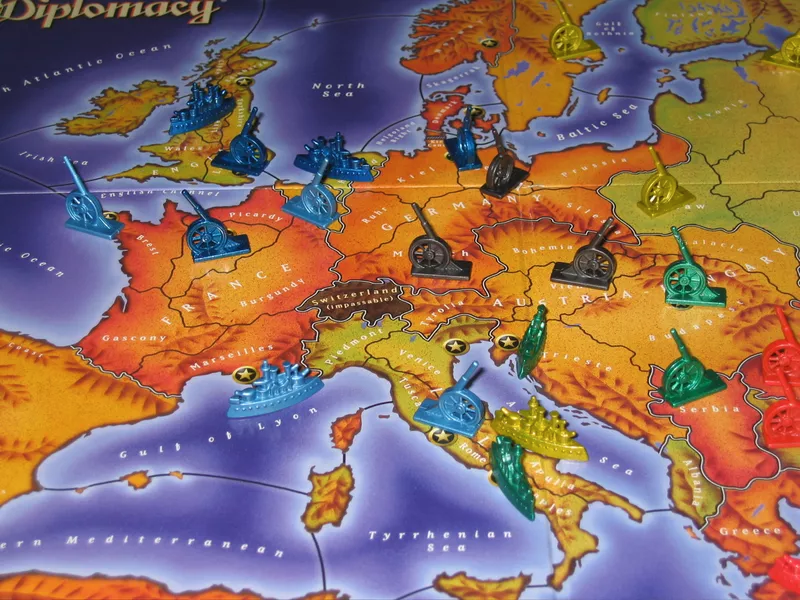
Somewhere at the end of 1950s, a new kind of board game was born. It was called Diplomacy and if you’re reading this, you most probably heard of it. A military strategy game with very simple rules assembled in such a way that you must rely on trust of other players, but you also cannot win if you don’t break that trust a few times. Yes, it’s a classical “board game” about making deals, screwing people over, getting screwed over, conspiring against conspirators and reading Art of War to feel very smart by absorbing amazing advice such as “if you want to win, you must not lose” or “be ugly to appear pretty and be invisible if you want to appear visible” or whatever, I never read the entire thing. Let’s go back to the subject at hand.
The accidental diplomatic larp: Braunstein
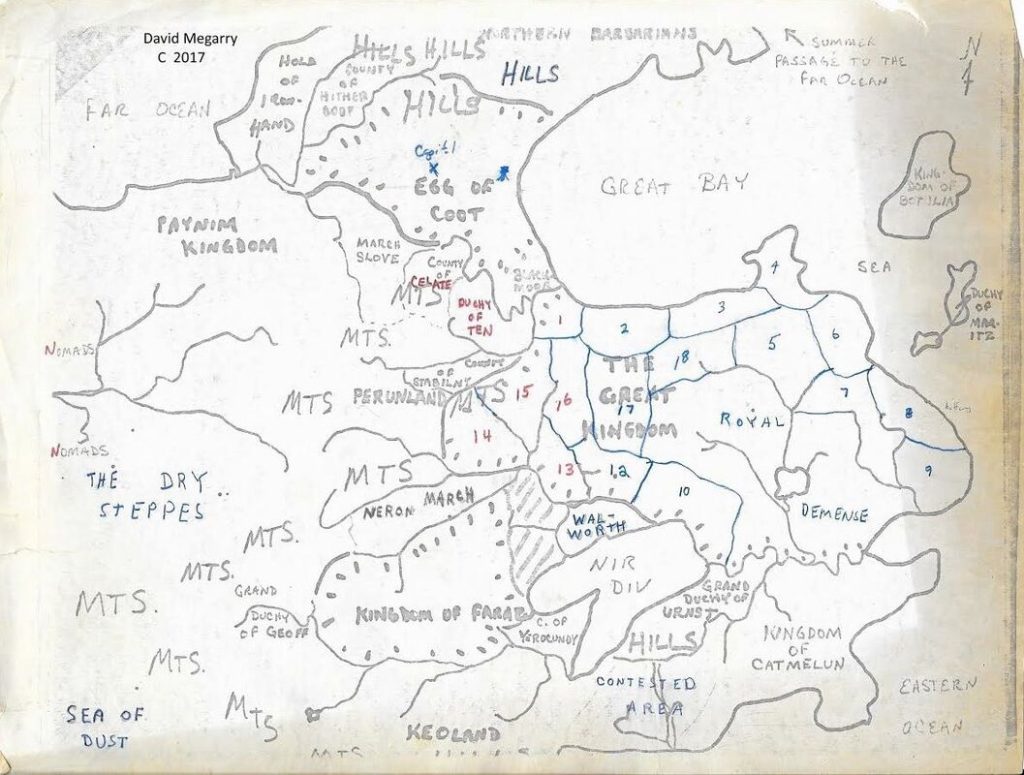
You may have also heard of Blackmoor by David Wesely played in the late 1960. Originally, Braunstein was supposed to be a wargame event where every player would go into a separate room to communicate with David the referee, but it all went very wrong in a very right way.
First problem was that a crazy amount of people showed up (20 was a lot back then, not everyone was into nerd shit like we are today), so they started getting non-military roles like mayor, banker etc. But then more things went “wrong”. People also started talking to each other pretending to be their assigned characters and making deals without the referee knowing. At one point, two players wanted to duel and the referee had to think up rules on the spot. It was an absolute failure, David thought at first, before he found out he invented a lot of cool new stuff for us.
Today, we obviously have terminology for what happened back there. We know words like “Larp” or “role play” or “in character” or “player limit”, and it’s a good thing we do. Just because something amazing sometimes comes out of people not having any idea what they’re doing, most of the time stuff just goes wrong in the wrong way.
Fast forward to modern times: Watch the Skies
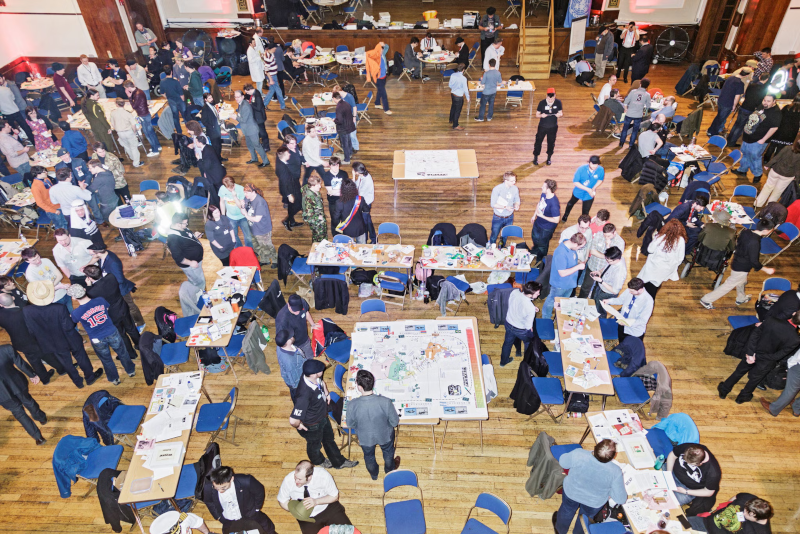
Some years ago I ran into some stories about a “megagame” where a lot of people would meet and each group would play representatives of a different country. There were many stories about it, but most of them were either deleted or downranked and I can’t be arsed to look for them, so here’s just an old Shut Up & Sit Down video series about it:
In short, aliens showed up and the world had to decide how to approach it. What do you tell the people? Are you ready to defend your world? Is there actual danger? Who will be the first to meet the aliens? Stories say that, as soon as the game started, Larp paranoia set in and the massive cold war began to warm up. I remember some crazy stories revolving around the newsletter. Journalists interviewed countries and most of the information were just lies and spins, but near the end everyone was so uninformed and distrusting that the newsletter became practically the only source of information.
If you really want to have the ending spoiled, select the text below:
the aliens came to check if we are ready to join a galactic something, but as they saw that the world ended up on the verge of all-out nuclear war against itself, they decided to postpone the invitation.
During that time, there was Steampunk
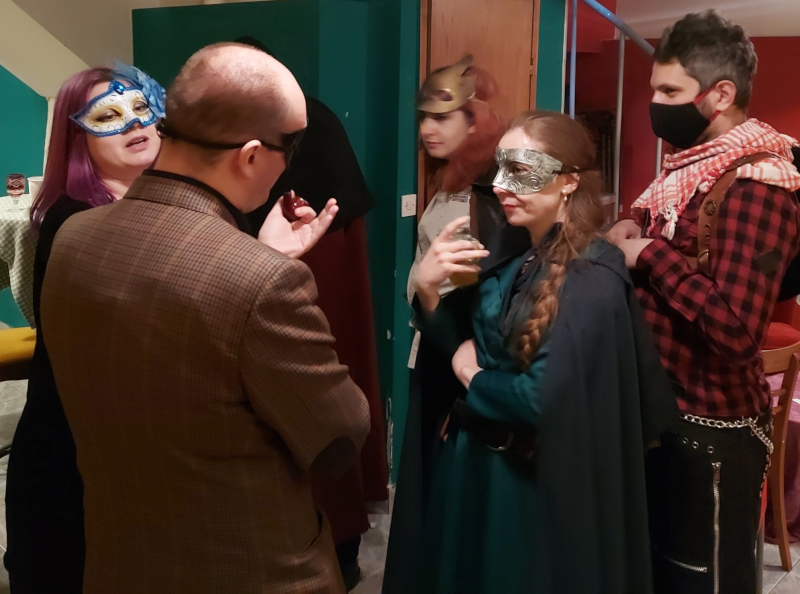
For almost 15 years, Sven (the Cloak and Boffer co-creator and illustrator) ran a Steampunk Larp series “Steam Makes the World Go Round” (para can mean both “steam” and “money” in Croatian) had a mechanic that feels similar to Braunstein, but Sven invented it all on his own. Every event included diplomats, robber barons, mercenaries, gamblers, inventors etc. that would have a situation to solve together. But at the same time, they would make little deals and discussions. After the game, everyone would report who they met, what they agreed about and, depending on the results, their country would expand or shrink, get or lose colonies etc. To make matters more complicated, many characters would be in secret societies that were often more important to them than their countries, so there was a lot of “self-backstabbing” as well.
The world started in 1900 and the world map was a copy of the real one. By 1903, it looked a lot different to the real world. I think the Great War started around 1904, in part because my Ukrainian mercenary always did stuff for other people or went drinking and never finished his own tasks, which helped lead to early fall of Russian monarchy and massive expansion of communism, which triggered wars in the whole world.
After almost 15 years of runtime, larp had some major changes that included aliens, time travel, and a big switch from the world map to city management (long story), occasional ttrpg events and many other things, but the classic Para game was definitely a good inspiration for a larp that is also a wargame. Of course, this is a slow burn that changes over multiple events, so many people don’t even notice that the map wildly changed in a year, but it’s still a good example.
So, what do I want?
I don’t know. Friend has a term for this: “I want something tasty”. It was what his dad would say when he didn’t know what he wants to eat but definitely wants something he’d enjoy. Some people scroll Netflix or “play Steam”. I wrote this blog post so you can suffer with me. You’re welcome.
I don’t think we’re allowing comments here because spam maybe idk, but feel free to go where you found the link to this and tell us about your favorite larp that is also a wargame or give any other thoughts and complaints you might have.

